
The Bondi Beach massacre in December 2025 is the most deadly and consequential terrorist attack on Australian soil. That it happened is a national tragedy. That it happened is not a surprise.
Bondi Beach massacre
Religious and other extremists targeting Jewish Australians is unsurprising. There were numerous signs and warnings over recent years, especially from the Australian Security Intelligence Organisation (ASIO), that such an event was possible, even likely, in the wake of the October 2023 Hamas attack on Israel and the resultant targeting of Jews in Australia.
Most clearly, ASIO’s raising of the national terrorism threat level from “possible” to “probable” on 5 August 2024 was a sign, with ASIO Director-General Mike Burgess’ accompanying warning: “We are seeing an increase in extremism. More Australians are being radicalised, and radicalised more quickly. More Australians are embracing a more diverse range of extreme ideologies, and more Australians are willing to use violence to advance their cause.”
Government inaction
Australian governments’ post-October 2023 permissiveness of a surfeit of ongoing anti-Israel and antisemitic protests, ignoring the public rants of known Muslim extremist hate preachers targeting Israel and Jews, allowing unbridled anti-Jewish behaviour on many university campuses, and tepid response to violent acts targeting Jews and Jewish sites all exceeded any rational boundary of freedom of expression or multicultural allowance. These behaviours targeting Jews, which are ancient hatreds imported into Australia, have continued to tear at the tatty fabric of Australia’s long-term societal norms. Many of these events were unlawful. Many of these actions were harmful to Jews and gentiles.
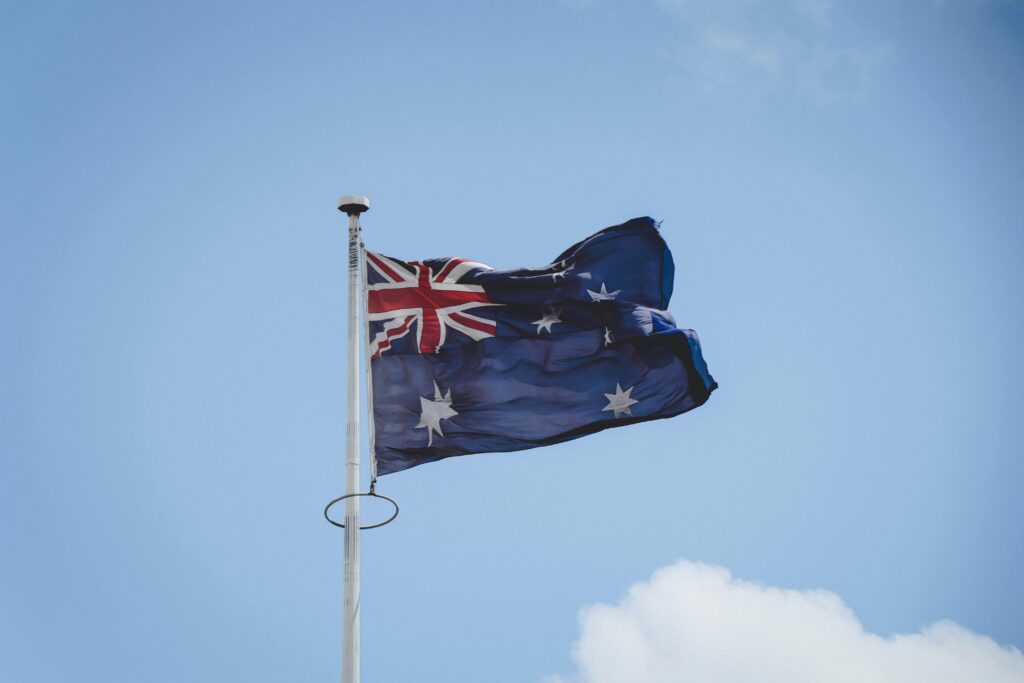
The environment created by government inaction empowered institutions and people who are, as shown by their behaviour and words, contemptuous of the ‘idea’ of Australia as embodied in its 1 January 1901 federation form. Collectively, these people hold extreme views across a spectrum of ‘grievances’. These people want to damage and reinvent Australia in line with their ideology, or their perceived victimhood, or their grievance du jour. Amongst these groups, for example, are Muslim extremists who reject Australian laws and customs – they agitate to be subject only to sharia law and Islamic customs, seeking to eschew Australian secular laws and customs. They want to tear at, even tear down, the Australian flag.
The scope of Muslim extremism
Understandably, the focus of many Australians and the media has been the Jewish element of this tragedy. Rightly so. But such a monocular view of the Bondi massacre risks obscuring the event’s true significance, which was perhaps best captured by British commentator Douglas Murray in an article he wrote in response to the Bondi Beach massacre, observing that Muslim extremists hate Jews first and, second, hate any other non-Muslim (termed as Kafir or infidel). If extremist Muslims massacre Jews, then non-Jews are also in the firing line.
That is what is being missed by many in their appreciation of the consequences of the Bondi Beach massacre. Until Bondi, for many Australians such murderous extremist Muslim violence happened in London, Bali, New York, Madrid, Manchester, and Paris. Not in Australia. We have grown accustomed to thinking the problem is ‘over there’, not ‘here’, notwithstanding the dozens of extremist Muslim attacks that have been thwarted by ASIO and police and the dozens of extremist Muslim people charged with and convicted of terrorist offences in Australia over the last three decades.
Pentagram’s alerts on social fracture and the need for leadership
Since mid-2024, Pentagram has written many articles addressing the issue of social fracture, the vulnerability of employees and third-party trusted insiders, the threat posed by religious and non-religious extremism, the threats posed by hostile nation states coercing people and undertaking espionage, foreign interference, and sabotage. These ailments and threats are posed to all Australians, not to a single group of Australians such as Jews. Pentagram’s articles consider these threats in the context of Australia’s protection of its critical infrastructure and national security.
Pentagram has also set out the case, albeit in the context of managing risks to Australia’s critical infrastructure, that in terms of leadership the Commonwealth Government has done all it can, and will do, to help owners and operators of critical infrastructure, the majority being private sector entities, to protect their critical assets and operations.
The nature and extent of that leadership is that the Commonwealth Government has developed policy, enacted legislation, provided limited guidance, and regulated the management of risks to critical infrastructure. From that point, it is up to owners and operators of critical infrastructure to assess the likely threats to their critical assets and operations and to determine how best to manage resultant security risks. However, they have enormous latitude on how they might manage those risks, knowing the Commonwealth’s legislation is generalised and the Commonwealth is not a position to truly assess an entity’s true risk management performance.
Pentagram’s articles, in pointing out that security of critical infrastructure is the responsibility of its owners and operators, has made clear that this group must lead in the absence of effective Commonwealth leadership. Leadership to protect Australia’s critical infrastructure assets cannot be abrogated to government because government is incapable of leading and protecting your critical assets and its people.
Bondi the catalyst for private sector leadership
One positive outcome from the Bondi Beach massacre is the public reaction by community, business, legal, national security, and sporting leaders to decry the Commonwealth Government’s unwillingness to lead, both in its domestic and international response to the October 2023 Hamas attack on Israel and to the linked Bondi Beach massacre itself.
Leading citizens are coalescing and calling on the Government to lead in the form of establishing a wide-ranging royal commission to explore all aspects of the Bondi Beach massacre starting from the October 2023 Hamas attack.
The informed commentariat suggests the Australian Government will not call a royal commission. The reason being base political reasons, the government judging that a royal commission will expose the government and individual politicians’ anti-Israel actions and ideology which have enabled and permitted more than two years of antisemitic protests and violence in Australia, ultimately resulting in the murder of 15 Australian citizens.
The true significance of the Bondi Beach massacre is exposing a lack of political courage and leadership at Commonwealth Government level since October 2023 on a matter of national security and the security of Australian citizens. The true significance transcends the consequences wrought on Jewish Australians; the true significance is the Commonwealth Government’s inability to identify and apply remedies to maintain and enhance Australia’s social cohesion and national security. Even if the Commonwealth eventually chooses to establish a royal commission in response to community pressure, the damage to its national security leadership credibility will have been done.
Private sector leaders need to step up.
Relevance to Australia’s critical infrastructure workplaces
Pentagram, in articles spanning 2024-2026, has explored how drivers external to the workplace can adversely impact employees and contractors. These drivers show in workplace behaviour. Pentagram’s 2024 article written for publication in the United States, Countering Insider Threat in a Fractious Society – a View from Australia, sets out the historical context of insider threat behaviour and explains why insider threat is an increasingly significant risk driven by changes in Australian society, erosion of trust, ever-dividing loyalties, and self-centred culture.
When a person comes to the workplace, they bring the ‘whole person’. Their performance and behaviour in the workplace is shaped by what happens to and around them in the workplace and what is happening to them in their non-workplace life. Those external drivers include events such as the Bondi Beach massacre as, whilst it may not directly affect them, it will feed into their underlying sense of security, their views on antisemitism, their views on Muslims, their views on what is permissible in Australia today, the effectiveness of law enforcement, and the stance of governments on social and national security issues. That is a potentially heavy cloak that can become the wallpaper to your life. It could tip someone over the edge in the workplace, resulting in harmful behaviour.
Remember, many people migrated to Australia to escape the type of sectarian violence perpetrated at Bondi.
Vulnerable workers
Because the worker may manifest any or all the drivers on them in their workplace behaviour, we can appreciate that behaviours in Australia since October 2023 will have impacted many people, with the Bondi Beach massacre delivering a high-voltage shock that will damage many and leave others uniquely vulnerable.
For example, in Pentagram’s 2025 article In the National Interest – Two Recent Insider Threat Events in Australia, we recount the February 2025 incident where two Muslim nurses employed at Bankstown-Lidcombe Hospital (a critical infrastructure hospital) engaged in an online video exchange with a person who had identified himself to them as Jewish. The nurses, engaging in this online activity in their workplace and apparently in uniform, said that they had killed, and would kill, Jewish patients in their care. Their behaviour was fuelled by Israel’s military response to the October 2023 Hamas attack on Israel, which was the largest mass killing of Jews since World War II. You might see the nurses, due to their predispositions, as vulnerable to their behaviour being shaped by Hamas’ actions, and Israel’s response.
Further, in Pentagram’s article In the National Interest – Critical Infrastructure as a National Security Priority, Pentagram sets out the threats to critical infrastructure workforces in terms of people being targets for coercion, recruitment, foreign interference, or saboteurs by hostile nation states, issue-motivated groups, religious and non-religious groups, and organised crime. On this theme we explore the issue of foreign interference in the articles Foreign Interference: China Interfering in Australia, and in Your Workplace and Foreign Interference – Iran in Australia. Adversary nation states are extremists in the same vein as Muslim extremists. The definition of extremism is: the holding of extreme political or religious views; fanaticism.
Another variant of the extremist genus that may be in your workplace is the Victorian branch of the Australian Services Union (the ASU). The ASU has a pro-Palestinian faction named ASU-for-Palestine. The Australian newspaper reported on 8 January 2026 that this faction had met repeatedly since the 7 October 2023 Hamas attack to determine how to “target Zionists and Israeli investments” seeking to pressure superannuation funds to divest any assets linked to Israel. It seems they succeeded with the ASU-linked Vision Super apparently divesting to two Israeli banks in October 2025.
A November 2023 meeting of an array of pro-Palestinian Victorian unions including ASU, United Workers’ Union, Health Workers, CFMEU, and AWU resolved to, as recorded in the meeting minutes, “use this matter (Gaza) as an organising tool” to increase union membership and “focus on a more radical stance” using the Hamas attack as a recruiting drive. The ASU equated its pro-Palestinian activism with supporting Aboriginal solidarity and trans rights. Such extremist views conflate anti-Zionism and antisemitism with other grievances and fringe outlooks thus attracting ever-growing numbers of protestors and activists who blithely mutter chants such as “from the river to the sea” perhaps not comprehending they are advocating genocide and destruction of a lawful pluralistic nation state. But perhaps because they are advocating for something that is ‘over there’ they cannot see the potential harm they implicitly support in Australia. Bondi show their words and behaviours can be consequential ‘here’, not ‘over there’.
Fractured Australian Society
Any further fracture of Australian society, any further fraying of Australia’s citizenry, will invite further incoherence, even chaos, that it appears the Commonwealth Government is ill-equipped to recognise or remedy. It is in such circumstances that Australia’s adversaries thrive. Militant Islamic entities such as Islamic State and al-Qaeda thrive in chaos, as they have in the Middle East and Africa. So too do the actions of adversary states Russia and China whose mastery of information operations through social media continue to shape how Australians see issues and behave.
Australia is vulnerable. The shock of the Bondi Beach massacre, sitting atop extremist activities across Australia in recent years, may prove to be the catalyst that hardens elements of Australian society against other citizens and migrants.
Consequences for critical infrastructure entities
For owners and operators of Australia’s critical infrastructure, on which Australia’s society and national security depend, now is the time to determine the likely people-based threats to your workforce, contractors, and suppliers and determine if there are risks that need to be mitigated.
The Bondi Beach massacre is a unique and powerful catalyst which has shown the limitations of the current Commonwealth Government, reinforcing that leaders in the private sector, leaders of critical infrastructure organisations, are obliged to understand the risk that extremists of all types pose, and take the security of their people, assets, and operations as a challenge they must take ownership of. Leaders need to consider if they need to fortify their workforce from the threats posed by intensifying social fracture.
Avoid blame culture – the opportunity to protect and build a security culture
None of this is to suggest that Muslims in your workforce should be in any way ostracised or blamed. In the context of protective security, we understand the risks that a person may bring but we never assume people are ‘bad’ or ‘good’.
To illustrate this point, a mature approach to personnel security now would be to understand which staff may feel vulnerable, including Muslim employees, and ensure appropriate support is provided.
Talk with them to see if they are being treated inappropriately by colleagues, ask if they are subject to adverse pressures in their private life, ask if the employer can assist them on the basis that almost all Muslims are innocent bystanders in the massacre perpetrated by two of their brethren.
Risk controls should be proportionate, lawful, and respectful of employee rights. They must protect both the organisation and its people, not stigmatise or unfairly target individuals or communities.
Conversely, if Muslim employees or contractors are evincing aberrant behaviour in the workplace, behaviours such as those seen with the Bankstown nurses, which have arisen in the wake of the Bondi Beach massacre then the employer needs to have a discussion with them, pointing out unacceptable behaviour and the need to change behaviour or be absent from the workplace for the security and wellbeing of fellow workers, stakeholders, and clients.
Taking steps such as these – genuinely enquiring about and supporting worker welfare and dealing firmly and legally with aberrant behaviours – will demonstrate good faith and help build a positive security culture in which workers feel secure and equipped to look after one another and look after their employer.
None of this may be easy. Leaders must be clear-eyed in determining the threats and risks to their organisation. Operate within the law and the bounds of privacy, but understand the drivers that shape workers’ behaviour today because Bondi has changed ‘business as usual’ in Australia and made Australia’s critical infrastructure less secure.
A final Thought
Australian society is more frayed and vulnerable today than it was 6:41 pm on 14 December 2025 due to violent extremism that ran virtually unchecked across Australia for more than two years. Australian society and individual citizens have two choices: come together and enable changes that, over time, will mend and nourish Australia, or rely on the current Commonwealth Government which has shown its reticence to truly grapple with and deliver a stronger and unified Australia.
If the Government is unable to counter protestors, how could the Government be seen as able to actually contribute to the protection of Australia’s critical infrastructure and the people who serve it? Private sector leaders need to perform this role.